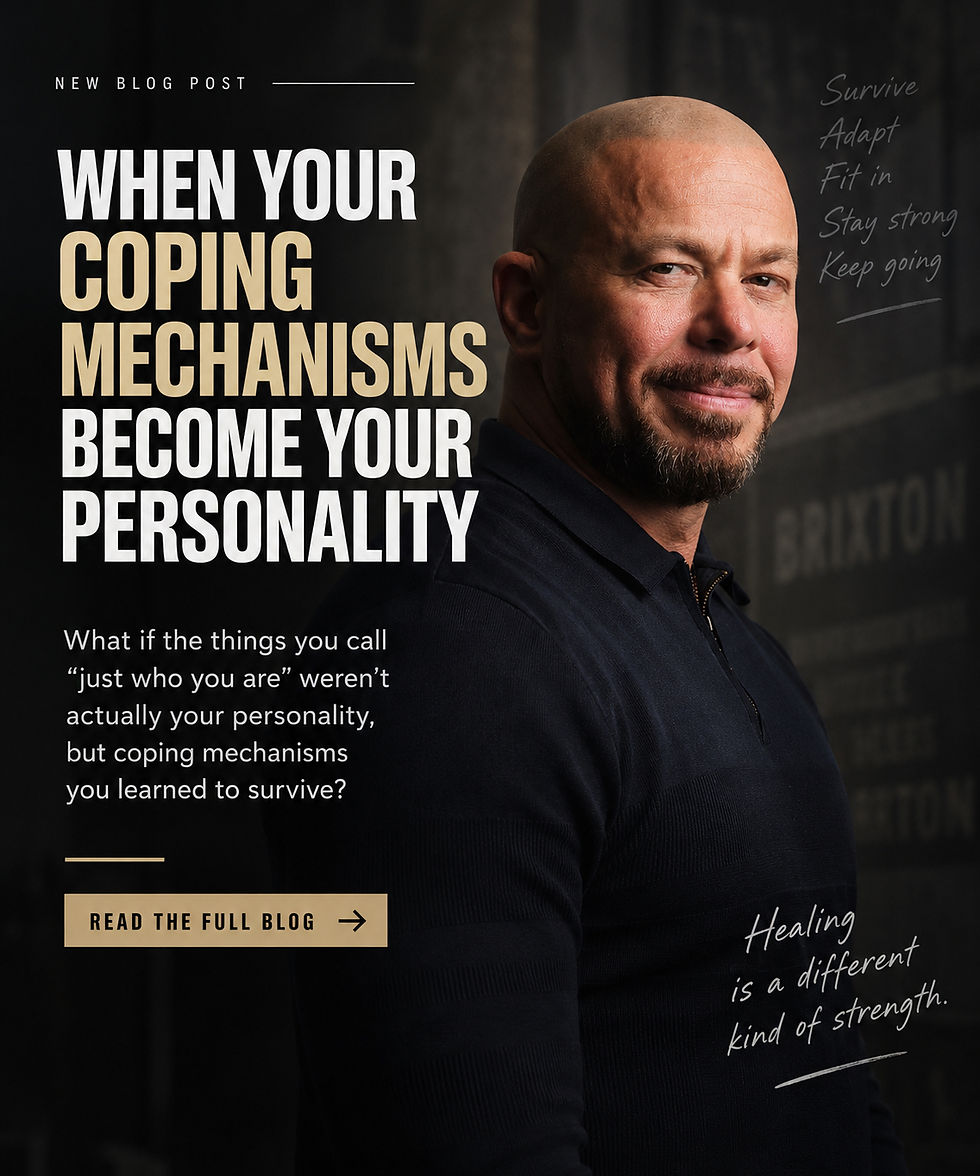
Why We Confuse Coping With Healing.


Coping gets praised.
Healing rarely does.
Coping looks functional. Responsible. Impressive, even.
Healing looks slower. Messier. Often quieter.
And for many people I work with, the problem isn’t that they aren’t coping,
it’s that they’ve been coping for so long, they think that’s the same as healing.
It isn’t.
Coping: What It Really Is
Coping is about getting through.
Healing is about coming back to yourself.
Coping strategies are often learned early. They’re intelligent responses to difficult situations. They keep us safe. They help us survive.
We cope with:
trauma
addiction and early recovery
relationship breakdowns
loss and grief
unsafe or unpredictable environments
And coping works.
Until it doesn’t.
What Coping Can Look Like
Coping doesn’t always look unhealthy.
It can look like:
staying busy
being “strong”
not talking about it
functioning at work
helping everyone else
joking instead of feeling
pushing emotions down
telling yourself you’re fine
staying sober but emotionally shut down
In addiction, coping might have looked like substances.
In recovery, coping can look like rigid routines, constant self-control, or avoiding anything that might open the emotional door.
In relationships, coping might be staying, minimising, or disconnecting.
After loss, it might be carrying on and never slowing down enough to grieve.
Coping says: Just get through today.
Why Coping Gets Confused With Healing
Because coping is visible.
People say:
“You’re doing so well”
“You’re strong”
“At least you’re functioning”
And internally, many people think:
I should be over this by now
Others have it worse
I don’t want to fall apart
So they cope harder.
But coping doesn’t process pain.
It contains it.
And pain that isn’t processed doesn’t disappear,
it waits.
What Healing Actually Looks Like
Healing is not about falling apart.
It’s about allowing what’s already there.
Healing often looks like:
feeling emotions you’ve avoided
noticing patterns instead of repeating them
softening instead of tightening
letting the body catch up with the mind
allowing rest without guilt
questioning old beliefs
challenging the Shitty Committee in your head
moving out of survival mode
Healing asks:
What happened to me?
not
What’s wrong with me?
My Own Relationship With Coping
I coped for years.
In addiction, coping looked like numbing.
After addiction, it looked like keeping busy, working hard, and staying in environments that didn’t align with my values.
I worked in security and on building sites.
Surrounded by racism, homophobia, aggression, values that went against who I was at my core.
I told myself I was coping.
But I wasn’t healing.
I was surviving.
It wasn’t until I slowed down, questioned my patterns, and allowed myself to feel what I’d avoided that things truly shifted.
Healing didn’t come from coping better.
It came from listening more honestly.
Coping vs Healing (Side by Side)
Coping says:
“I just need to get through this.”
Healing says:
“I need to understand what this has done to me.”
Coping manages symptoms.
Healing addresses roots.
Coping keeps you functional.
Healing helps you feel whole.
Both have their place.
But they are not the same.
Why We Get Stuck in Coping Mode
Because coping once saved us.
Our nervous system doesn’t forget that.
Trauma, addiction, and loss teach the body to stay alert. To brace. To manage. To keep going.
Letting go of coping can feel unsafe.
Even when life is calmer.
That’s why healing often needs support.
Because doing it alone feels like too much.
How Therapy Helps Move From Coping to Healing
In my work with clients, we gently explore:
what they’ve been coping with
how long they’ve been surviving
what their coping has cost them
what healing might look like now
There is no rushing this.
Healing isn’t a task to complete.
It’s a process of safety, understanding, and compassion.
Final Thought
Coping kept you alive.
It deserves respect.
But surviving is not the same as living.
If you’re functioning but exhausted.
Sober but disconnected.
Busy but unfulfilled.
It might not be that you’re failing to cope.
It might be that you’re ready to heal.
And that’s not weakness.
That’s growth.
Jr Atkins MNCPS Accredited


This is so real Junior. Thank you 🙏
Coping deffo is a survival. Its what helps you get through the difficult moments and keeps you moving when life feels overwhelming. But healing goes deeper than simply surviving. Healing is about discovering who you truly are and allowing that self to grow beyond the pain. That can be incredibly hard when you have spent much of your life emotionally dysregulated and carrying the weight of trauma that comes with it. Yet healing is the slow process of learning yourself, rebuilding stability, and expanding into the person you were always capable of becoming. 🤞
Amazing insight Jr