From Surviving to Self-Discovery: My Journey Into Therapy

Updated: Apr 10

For years, I thought being strong meant carrying everything alone. I learned how to survive, to hold it together, to keep moving, and to make sure no one saw the cracks. But the truth is, surviving isn’t the same as living. Somewhere along the way, I forgot what it meant to feel safe, connected, and enough.
Working in the field of addiction and mental health, I met countless people who were doing exactly what I had done, getting through each day the only way they knew how. Some used substances, others used humour, work, or people-pleasing. We all had our ways of coping, avoiding the parts of ourselves that felt too painful to face.
That’s what first drew me to therapy. I wanted to understand what was happening beneath the surface, in me, in others, and in the patterns that kept repeating no matter how much willpower or effort we threw at them.
The Turning Point
Like many who end up in this profession, my journey into therapy didn’t start with textbooks; it started with my own pain. I reached a point where I realised that rescuing others wasn’t the same as healing myself.
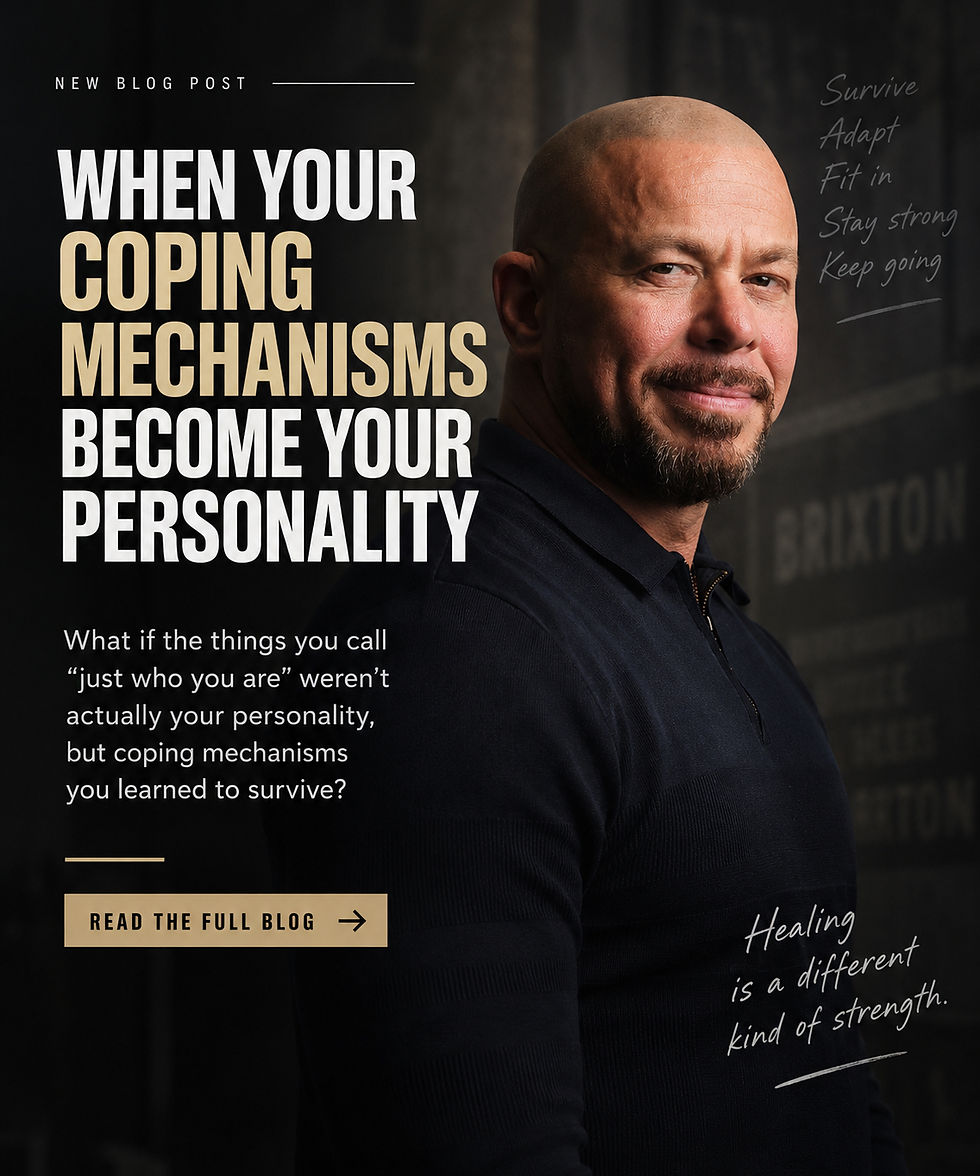
Through my own therapy, I learned that the voice in my head, the one that told me I wasn’t good enough, that I should be doing more, and that everyone else had it figured out, wasn’t the truth. It was an old story, built from shame, fear, and survival.
Slowly, I began to meet myself with compassion rather than criticism. And that changed everything.
My Approach
Today, as an integrative counsellor and addictions therapist, I bring that same blend of curiosity, compassion, and real-world experience into my work.
I believe therapy should feel human, not clinical or distant. It’s not about being “fixed” because you’re not broken. It’s about exploring who you are beneath the layers of survival, the patterns, beliefs, and defences that once kept you safe but now hold you back.
My approach draws on person-centred therapy to create a safe and trusting relationship, CBT to challenge unhelpful thoughts and behaviours, and Gestalt techniques to bring awareness to what’s happening in the present moment. But at the heart of it all is connection, helping you reconnect with yourself, your values, and your voice.
From Shame to Self-Esteem
One of the most common threads I see in therapy, especially in recovery, is shame. It’s that deep sense of “I’m not enough” that hides behind perfectionism, people-pleasing, or addiction.
When we carry shame, we learn to wear masks, showing the world a version of ourselves we think will be accepted. Therapy gives us a space to take those masks off gently and discover who we really are underneath.
That’s where self-esteem begins, not in achieving more, but in accepting more of yourself.
The Journey of Self-Discovery
In therapy, we embark on a journey of self-discovery. This journey is not always easy, but it is profoundly rewarding. We’ll explore the layers of your identity, uncovering the beliefs that have shaped you.
Understanding Your Emotions
Emotions can be overwhelming. They can feel like a tidal wave, crashing over us when we least expect it. In therapy, we’ll learn to navigate these emotions together. You’ll discover that it’s okay to feel, to express, and to process what’s inside.
Building Healthy Boundaries
Setting boundaries is essential for your well-being. It’s about knowing your limits and communicating them clearly. We’ll work on identifying where you need boundaries in your life and how to implement them with confidence.
The Inner Critic
We all have that inner critic, the voice that tells us we’re not good enough. In therapy, we’ll confront that voice. We’ll challenge its validity and learn to replace it with a kinder, more compassionate narrative.
The Role of Shame in Recovery
Shame can be a significant barrier to recovery. It can keep us trapped in cycles of self-doubt and addiction. Together, we’ll explore how shame has impacted your life and how to transform it into a source of strength.
Self-Esteem and Authenticity
Building self-esteem is about embracing your authentic self. It’s about recognising your worth and celebrating who you are. We’ll work on cultivating self-love and acceptance, allowing you to shine in your true light.
Healing the Child Within
Many of us carry wounds from our childhood. These wounds can influence our behaviours and relationships. In therapy, we’ll gently explore these past experiences, allowing for healing and growth.
What You’ll Find Here
This blog is a space to explore the journey from surviving to self-discovery. I’ll be sharing reflections, tools, and insights on topics like:
Building healthy boundaries
Understanding the inner critic
The role of shame in recovery
Self-esteem and authenticity
Healing the child within
Whether you’re in recovery, curious about therapy, or just trying to make sense of yourself, you’re welcome here. You don’t have to have it all figured out. You just have to start where you are.
A Final Word
If there’s one thing I’ve learned through this work, it’s that healing isn’t about becoming someone new; it’s about remembering who you were before the world told you who to be.
You deserve a life that feels like yours.
Welcome to Jr Atkins Therapy I’m glad you’re here.
If you’re looking for support, I invite you to explore the resources available. Together, we can navigate this journey towards healing and personal growth.
You are not alone in this. Let’s take this step together.


Very interesting.... taking the first step is always the hardest. What if you cannot remember the person you were before the world "told you" who we are?
This really spoke to me. The reminder that healing is about remembering who we were before the world shaped us hit home. Thank you for creating a space that feels safe and real.
Inspirational Jr. Thanks !